.svg)
Hybrid Cloud Storage Software for Enterprise Content

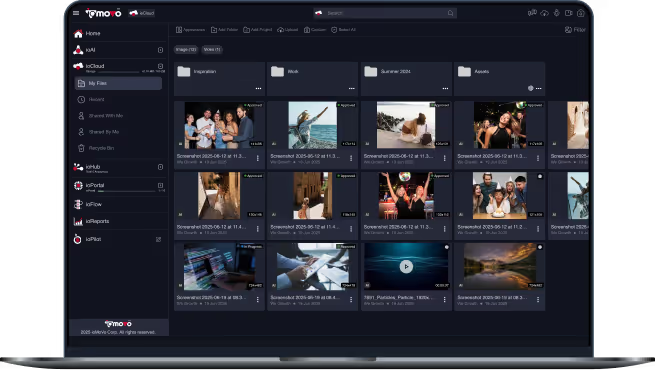
ioHub is the data connectivity and orchestration layer that links all your content sources — AWS, Azure, Google Cloud, SharePoint, Dropbox, Box, on-prem servers — into ioCloud’s unified AI-aware storage layer. Index in place. As hybrid cloud storage software, ioHub unifies cloud, on-prem, and legacy systems into one governed, searchable layer.

Index in place
No migration
SOC 2 Type II
ISO 27001
Standards-based MCP integration.
Why Teams Choose ioHub

Days to deploy
Connect existing storage in days, not months
0 files migrated
Content stays in its source system

100+ source systems
Cloud, on-prem, hybrid, legacy

Continuous sync
Changes detected automatically across every connected system
Enterprise cloud storage, unified
One federated layer across every environment youalready run
Connect to Any Content Source
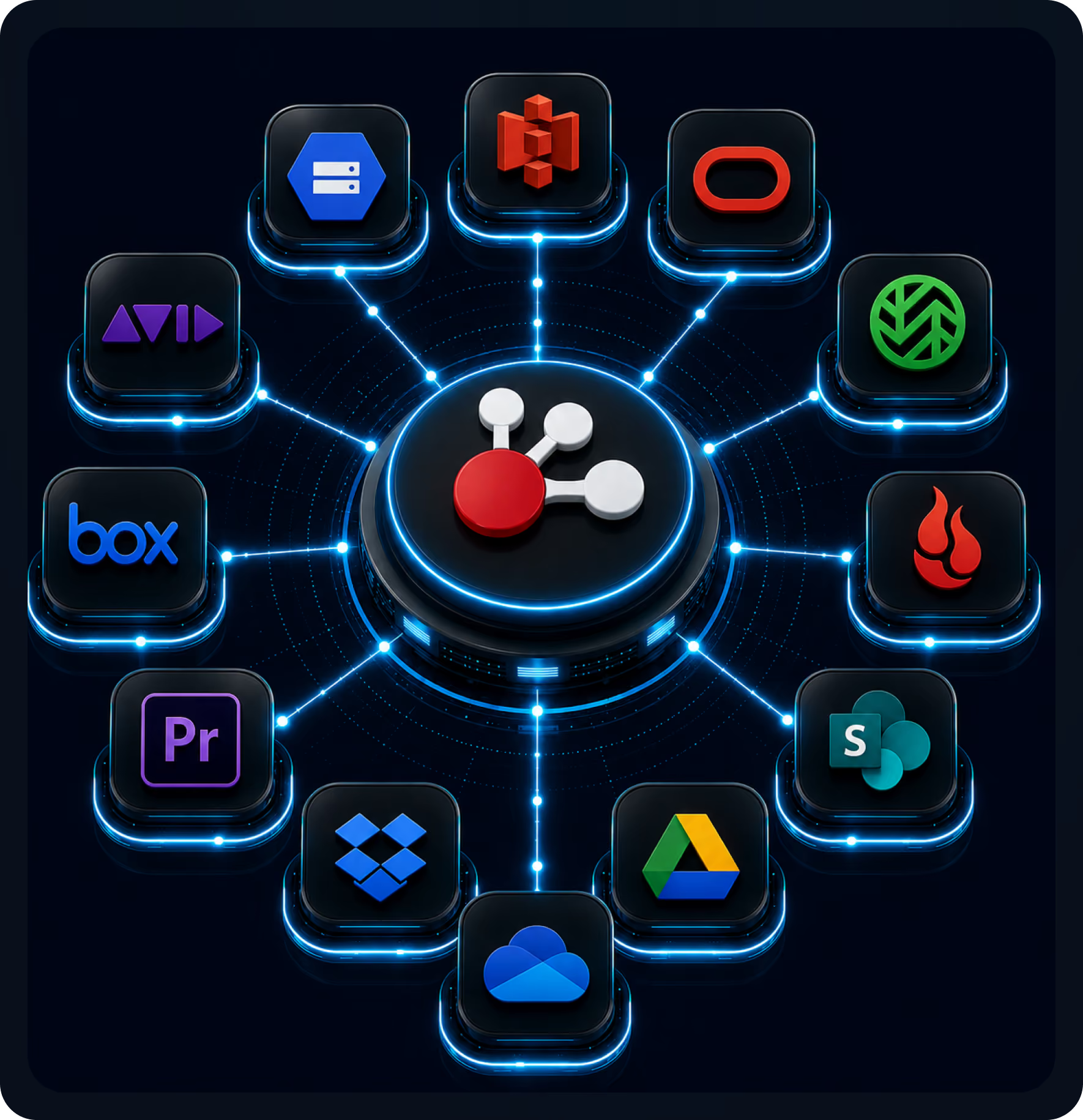
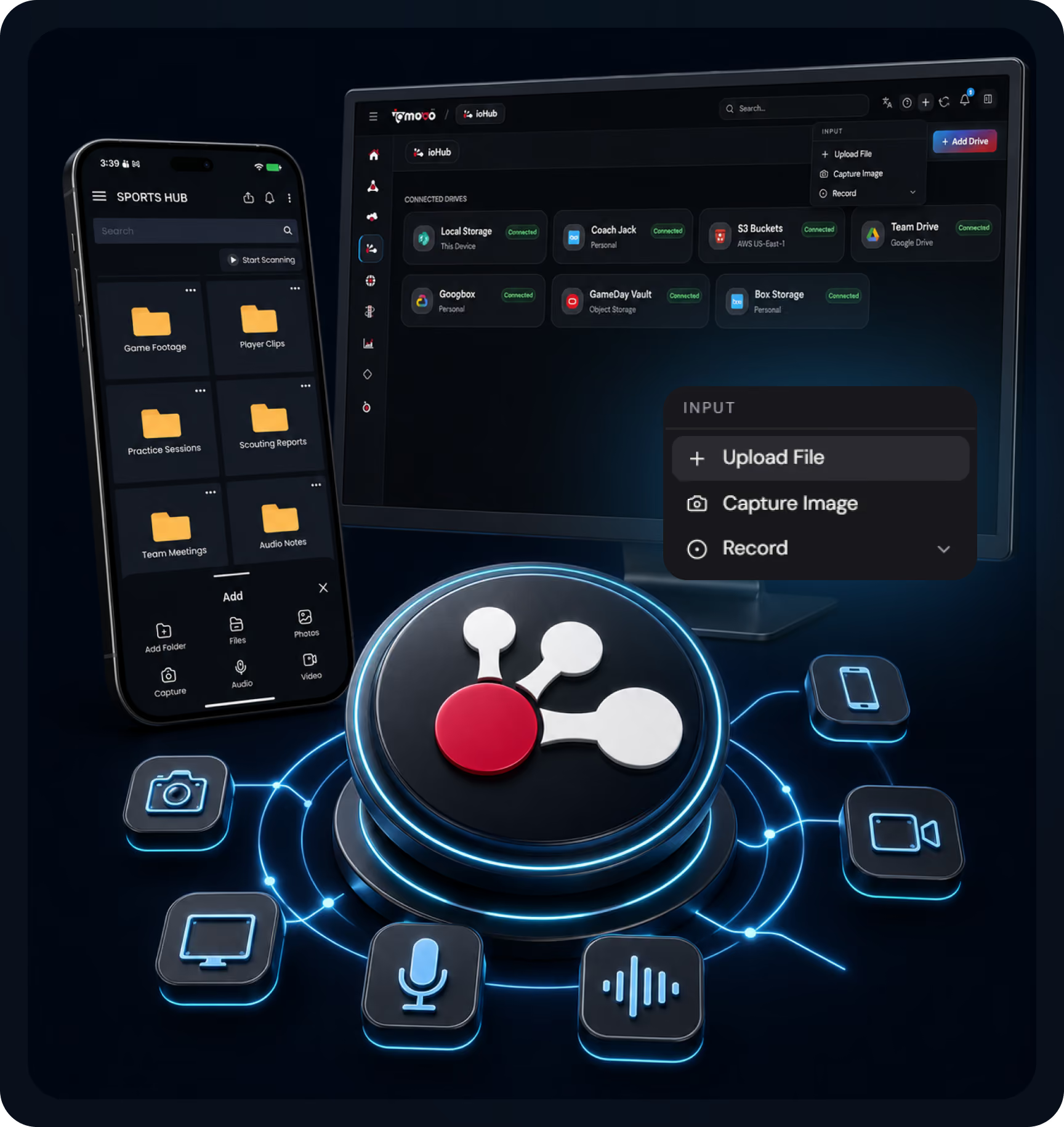
ioHub connects to the systems your organization already runs. As one of the industry's most flexible hybrid cloud storage solutions, it indexes everything in place and surfaces it through ioCloud as a unified, searchable, AI-ready content layer. The Capture Layer also feeds into ioHub — captured content (audio, video, images, screen recordings) flows directly into ioCloud or through ioHub depending on your storage architecture.
Cloud storage
AWS S3, Azure Blob Storage, Google Cloud Storage
Oracle Cloud, Wasabi, Backblaze B2, IBM Cloud Object Storage
S3-compatible storage (Ceph, MinIO, others)
File sharing and collaboration
Microsoft SharePoint and OneDrive
Google Drive and Google Workspace
Dropbox, Box
Enterprise content systems
Avid storage, Adobe Premiere project repositories
On-prem and legacy
On-prem file servers, network attached storage (NAS)
SFTP and FTP servers
LTO tape libraries
Direct capture (NEW v2.1)
Mobile capture (iOS / Android) — microphone, camera, screen recording, video sessions
Desktop capture — screen recording, audio, dictation
How ioHub Works
Connect
Configure connectors for source systems feeding into ioMoVo — cloud storage, file sharing, enterprise content systems, on-prem servers — typically deployed in days. The Capture Layer also routes through ioHub for organizations wanting captured content in their own infrastructure, not ioMoVo's managed storage.
Index
ioHub indexes content in place -metadata, structure, full text - without moving files, syncing changes continuously. As content arrives, ioAI auto-applies tagging and classification; scheduled re-indexing keeps repositories current.
Federate
Federated search across all connected systems via ioPilot, with metadata normalization for consistent results. Through MCP (Model Context Protocol), connected LLMs securely access ioHub-indexed repositories - a standards-based path to AI integration without proprietary connectors.
Built for Hybrid Content Realities
What we hear from teams managing distributed enterprise cloud data storage:

Content scattered across AWS, Azure, SharePoint, on-prem servers - no unified way to search across all of it
Migration projects to consolidate content take 12-24 months and disrupt operations - they keep getting deferred
AI search tools require copying content into vendor cloud - IP, regulatory, and cost concerns block adoption
Existing storage governance policies (retention, access controls, regional residency) can’t be preserved when migrating to a new system
Connectors to enterprise systems are usually one-way, surface-level, or require custom integration projects
How ioHub solves it:
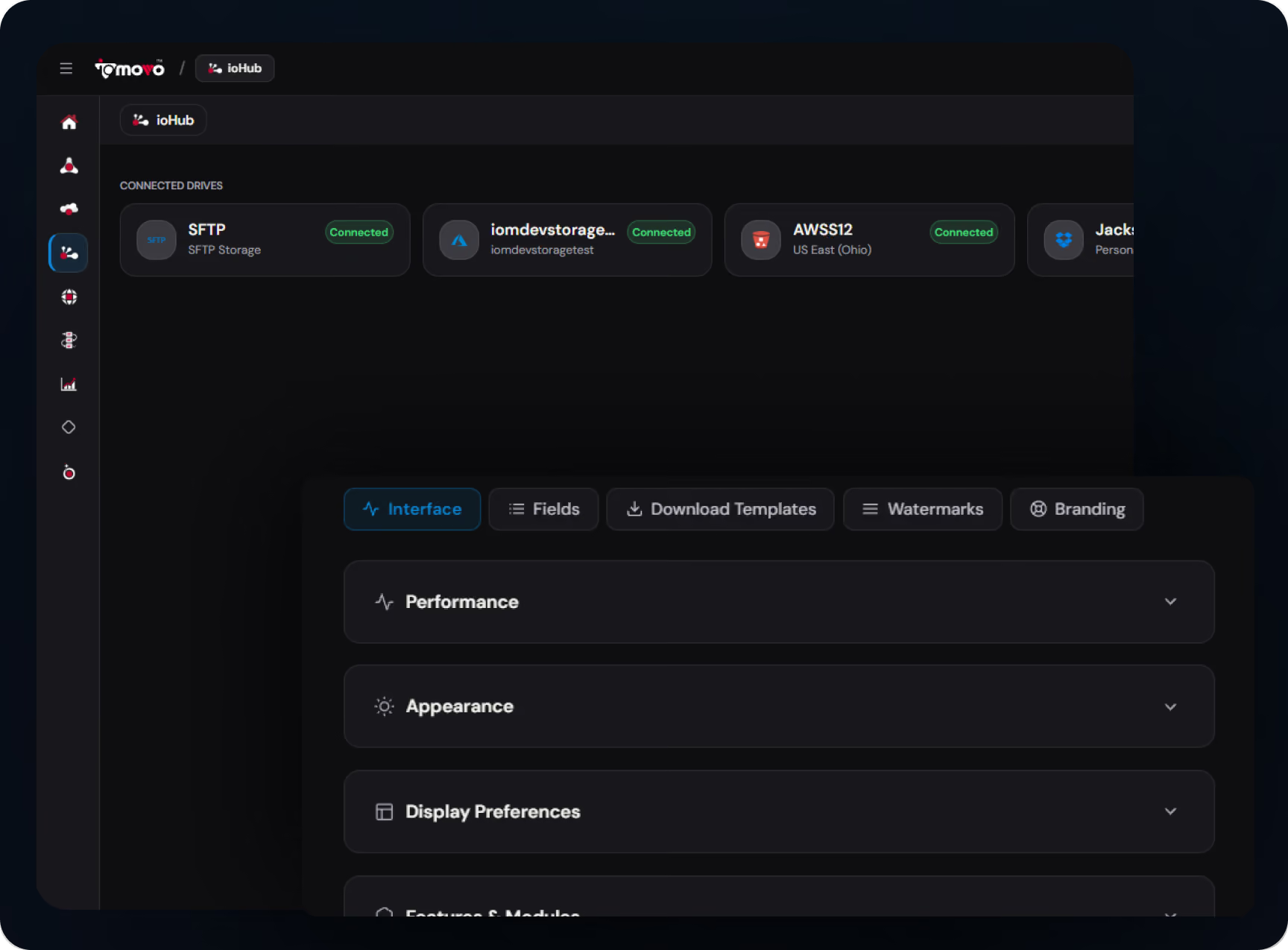
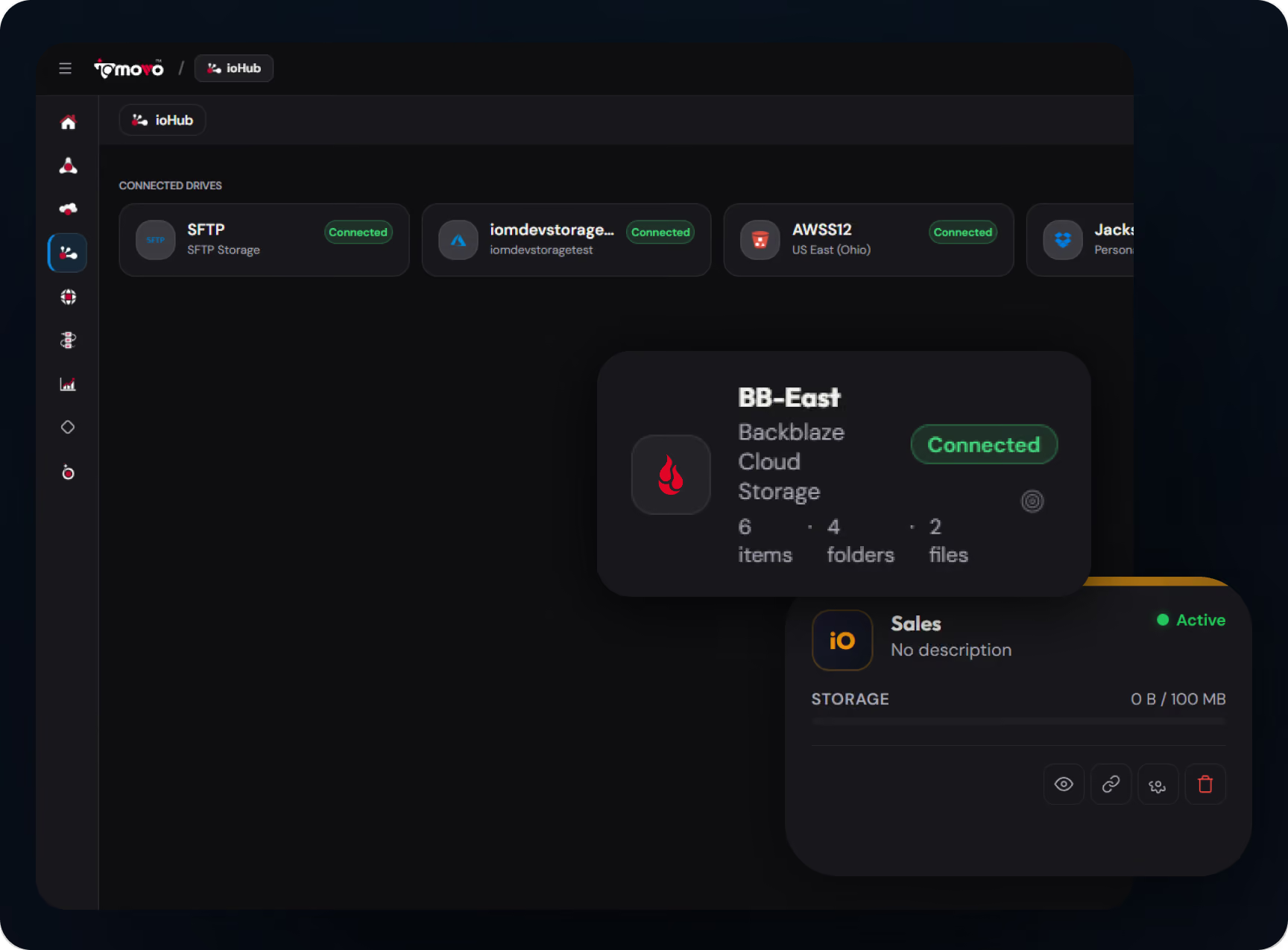
Connect AWS, Azure, Google Cloud, SharePoint, Dropbox, Box, Avid, on-prem servers, NAS, FTP - all in days, not months. Federated search across every connected system simultaneously through ioPilot.
Zero migration. Content stays in its source system under existing governance policies. ioHub indexes in place; ioCloud surfaces a unified searchable layer on top.
BYO-AI architecture means content doesn’t leave your infrastructure for AI processing in sovereign deployments. NVIDIA DGX Spark on-prem option for high-performance edge AI.
Existing governance posture is preserved - retention rules, access controls, residency. ioMoVo doesn’t override; it operates on top.
Where ioHub Customers Use It
Multi-cloud organizations
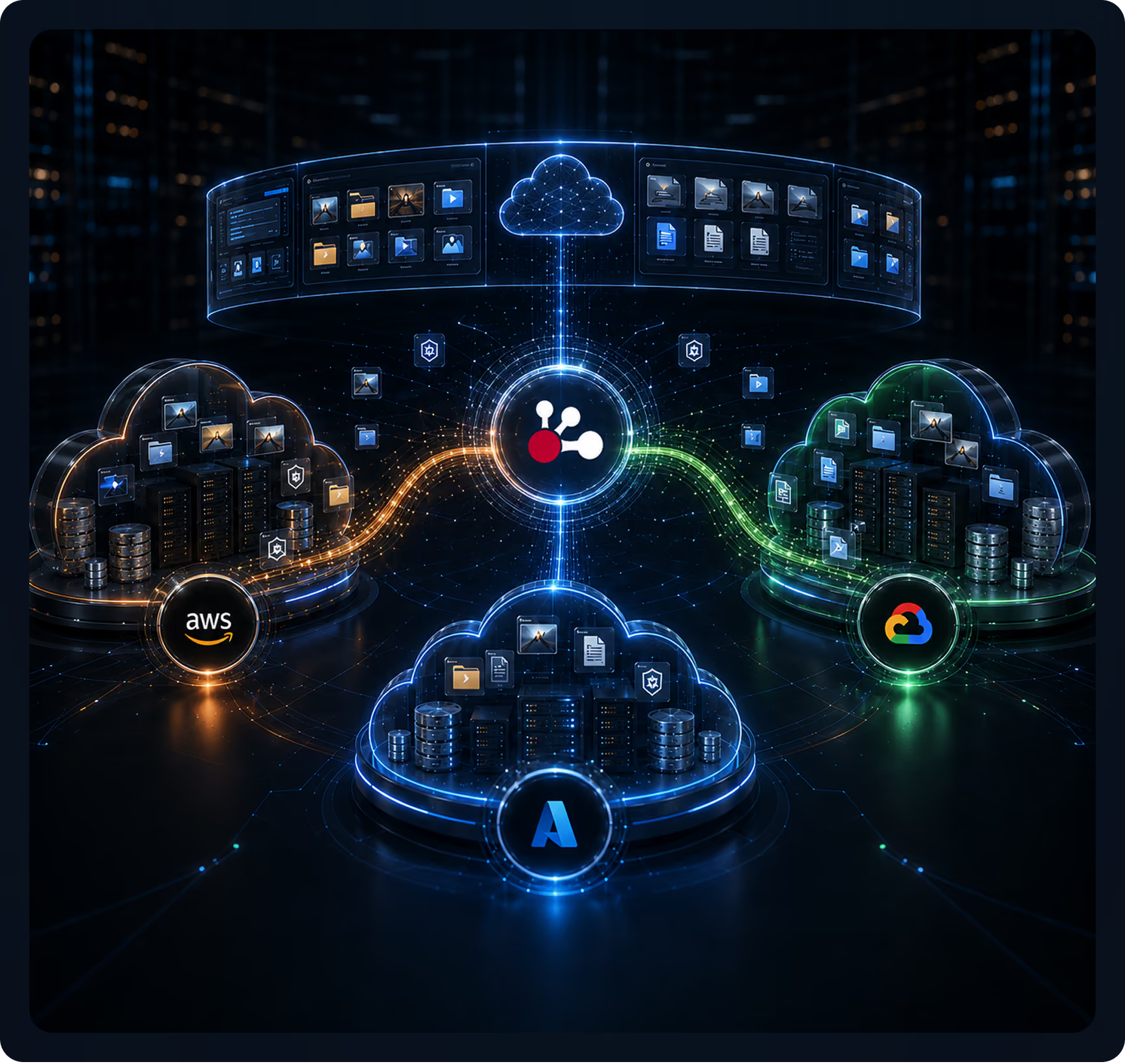
Enterprises running content across AWS, Azure, and Google Cloud unify search and AI processing across all three without migration. ioHub indexes in place, ioCloud surfaces the unified layer, ioAI processes content per cloud-specific compliance requirements.
Hybrid cloud deployments
Organizations with on-prem file servers, NAS, and tape libraries plus cloud storage get a unified content layer across both - a true hybrid cloud storage approach without forced migration. ioHub connects on-prem alongside cloud sources. For sensitive on-prem content, sovereign AI deployment (DGX Spark) keeps AI processing local.
Existing-stack consolidation
Teams with content in SharePoint, Dropbox, Box, Google Drive across departments use ioHub to consolidate access without forcing a migration. Each team continues using their preferred tool; ioMoVo provides cross-system search and AI on top.
Core ioHub Capabilities
Connect to any source
Cloud, on-prem, SaaS, legacy. Connectors deployed in days. 100+ supported source types.
Index in place (no rip & replace)
Content stays in source storage. ioHub indexes metadata, structure, full text. Governance policies preserved.
Federated search across repositories
Search all connected systems simultaneously. ioPilot usesioHub's federated index for natural-language queries.
Metadata normalization and enrichment
Normalizes differing source schemas for consistent search and AI. ioAI enrichment adds tagging, classification, transcription metadata at ingest.
Continuous sync and change detection
Auto-detects new, modified, and deleted content. Index stays current; active repositories re-index on schedule.
Capture Layer ingest (NEW v2.1)
Ingests audio, video, images, and screen recordings from ioMoVo's Capture Layer. Routes to ioCloud or BYOS storage.
MCP-based AI integration (NEW v2.1)
Connected LLMs (Claude, OpenAI, open-source) access ioHub repositories via MCP — standards-based, no lock-in.
Standards-based ingestion agent (NEW v2.1)
ioMoVo's A2A ingestion agent triages content through ioHub, routing to metadata, transcription, and compliance agents.
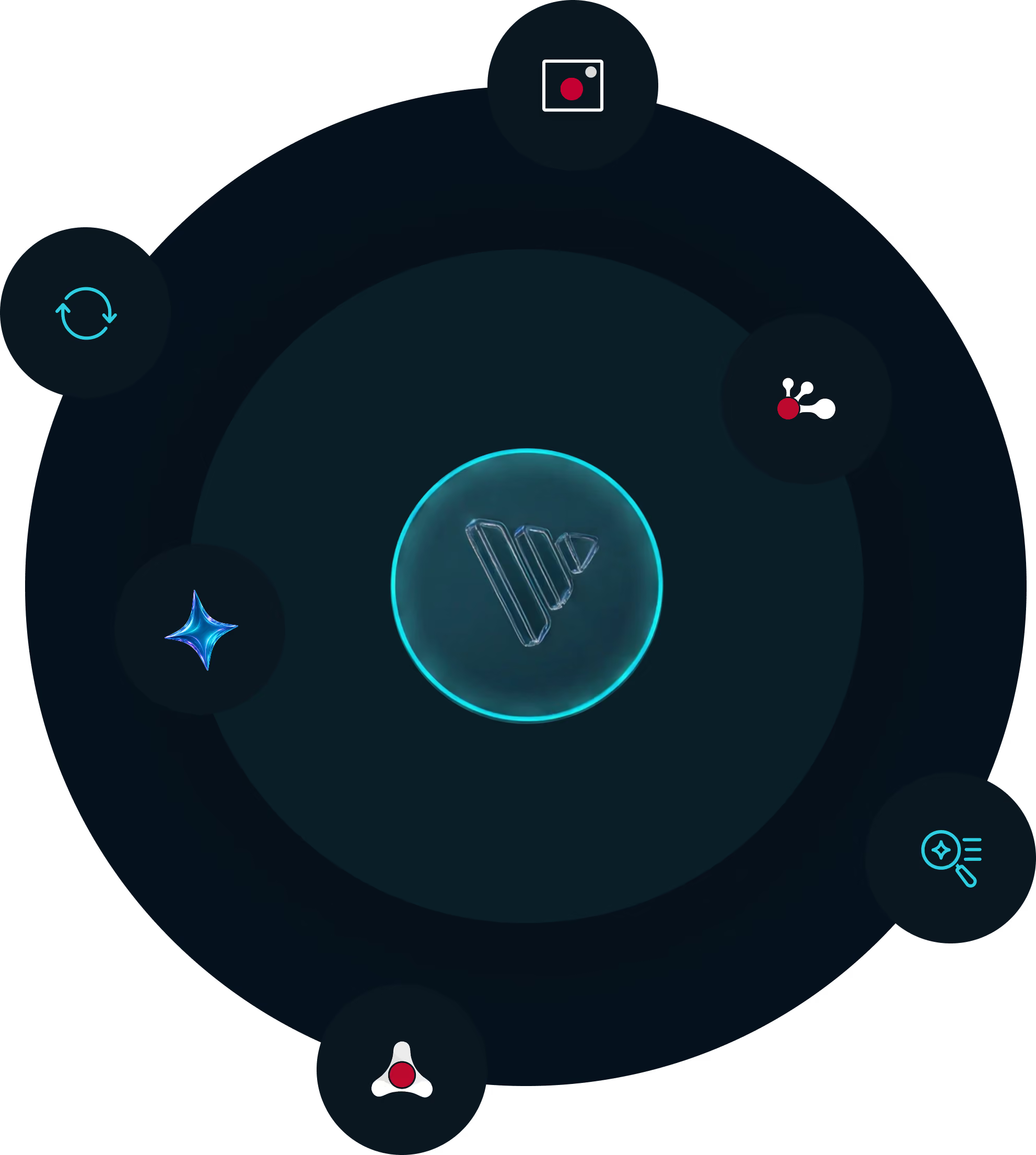
Where ioHub Fits in the ioMoVo Platform
ioMoVo is a cloud-native AI content platform with six modules and a capture layer. Each addresses a specific layer of the content lifecycle, unified by ioCloud's approach to data management and storage.


Frequently Asked Questions

No. ioHub indexes content in place. Files stay in their source systems — SharePoint, S3, on-prem servers. ioMoVo retrieves content at access time using your existing source-system permissions. No bulk copying, no migration. Content captured through ioMoVo’s Capture Layer can land directly in ioCloud (managed storage) or be routed through ioHub to land in your preferred BYOS target.

Most enterprise cloud storage deployments with ioHub connect first sources within days. Cloud storage connectors (AWS, Azure, Google Cloud) deploy in hours. On-prem and legacy system connectors may require additional infrastructure planning.
Yes. As hybrid cloud storage built for regulated environments, ioHub operates on top of source-system governance — retention, access, residency, encryption — without overriding it. ioMoVo retrieves content using existing permissions. For organizations with strict governance posture (regulated industries, sovereign cloud requirements), this is the design intent.
Through MCP (Model Context Protocol), connected LLMs can securely access ioHub-indexed repositories. ioAI orchestrates between commercial LLMs (OpenAI, Anthropic, Google Gemini and Vertex AI, Microsoft Azure OpenAI), open-source LLMs (LLaMA, Mistral, Mixtral, Falcon), vision and multimodal models (YOLO, BioClip, Segment Anything, custom VLMs), and sovereign deployments (on-prem, air-gapped, region-specific including KSA / Saudi Arabia for MENA deployments). For high-performance on-prem AI, ioMoVo deploys models on NVIDIA DGX Spark systems. In sovereign deployments, content never leaves your infrastructure boundary — LLMs operate within RAG-controlled bounds.
Traditional storage gateways are about caching and access — ioHub is about intelligence. ioHub indexes content for federated search across every connected source, normalizes metadata so search and AI work consistently, enables AI processing through ioAI without copying content, and supports governed agentic workflows through MCP and A2A architecture. ioHub is hybrid cloud storage software, but the value is the intelligence layer it enables, not the storage abstraction itself.
Yes — most enterprise content systems with documented APIs can be supported through custom connector development, extending ioHub's enterprise cloud data storage footprint as your stack grows. Contact sales for source systems not listed; the connector library expands continuously. ioHub also accepts content via standard protocols (S3-compatible APIs, SFTP, REST APIs) for systems where bespoke connectors aren’t the right fit.
Connect your existing content stack in days
See ioHub - ioMoVo's flagship hybrid cloud storage software - running on your actual storage infrastructure. We’ll connect to representative source systems, demonstrate federated search and AI integration, and show how governed agentic architecture works on your content. Or start free - connect your first source and see ioHub in action.